
START WITH ONE MOVEMENT
Make the next
frame count.
A good animation begins with a decision you can see. A pause, a shift of weight, a clearer silhouette.
Choose a small experiment for the next pass. The first motion study compares timing and spacing; the notebook below also covers planning, light and handing work to someone else. Keep the draft small enough to change one decision and see its effect.
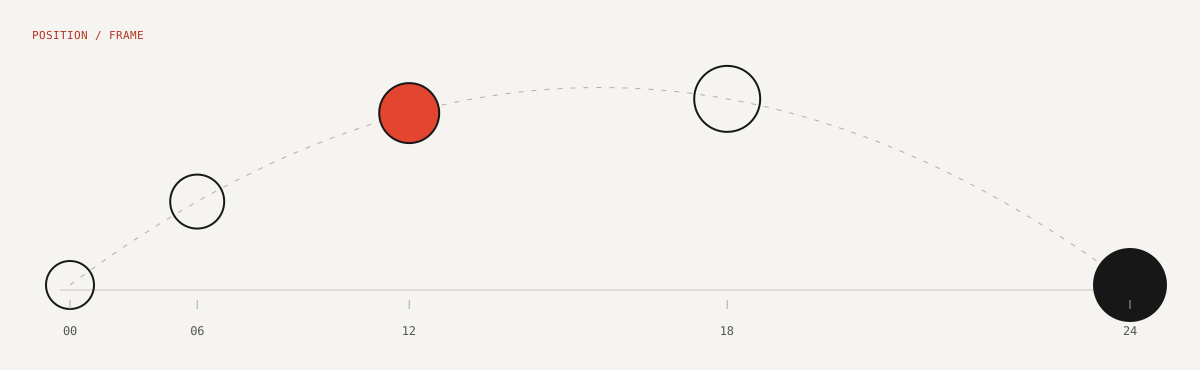
On the worktable
Open the whole notebook ↗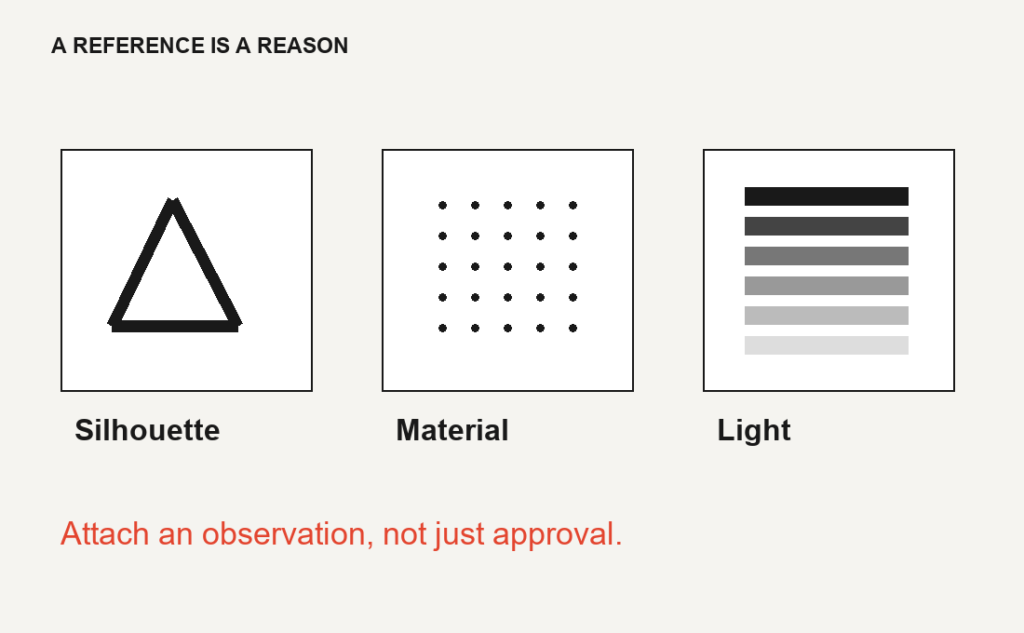
Build a reference board that answers a question
Collect less, annotate more and give every image a job.
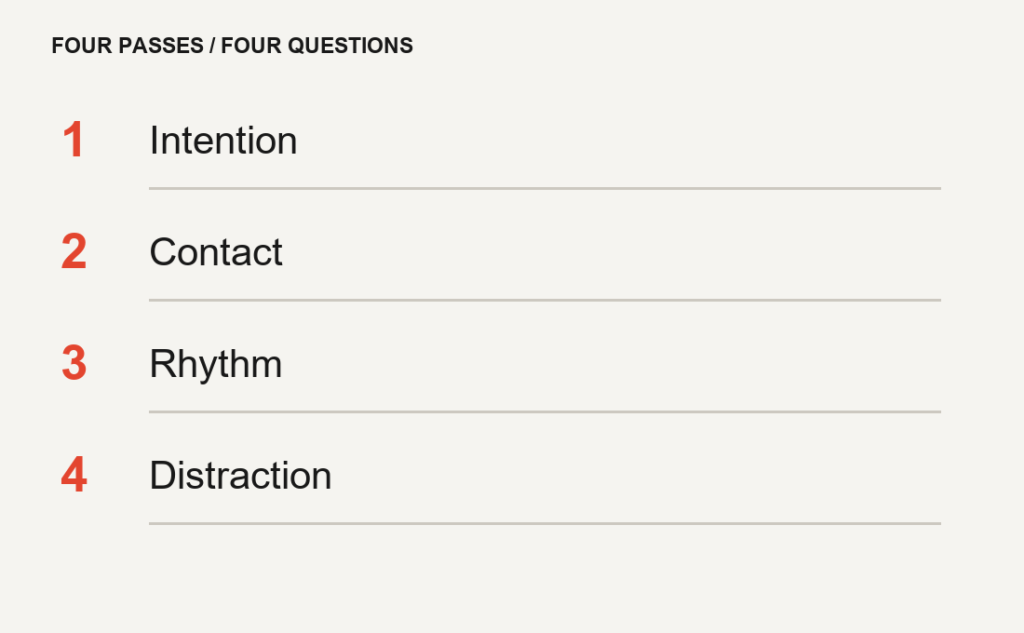
Review the work. Then choose what to show.
A repeatable way to find the next useful change without collecting vague notes.
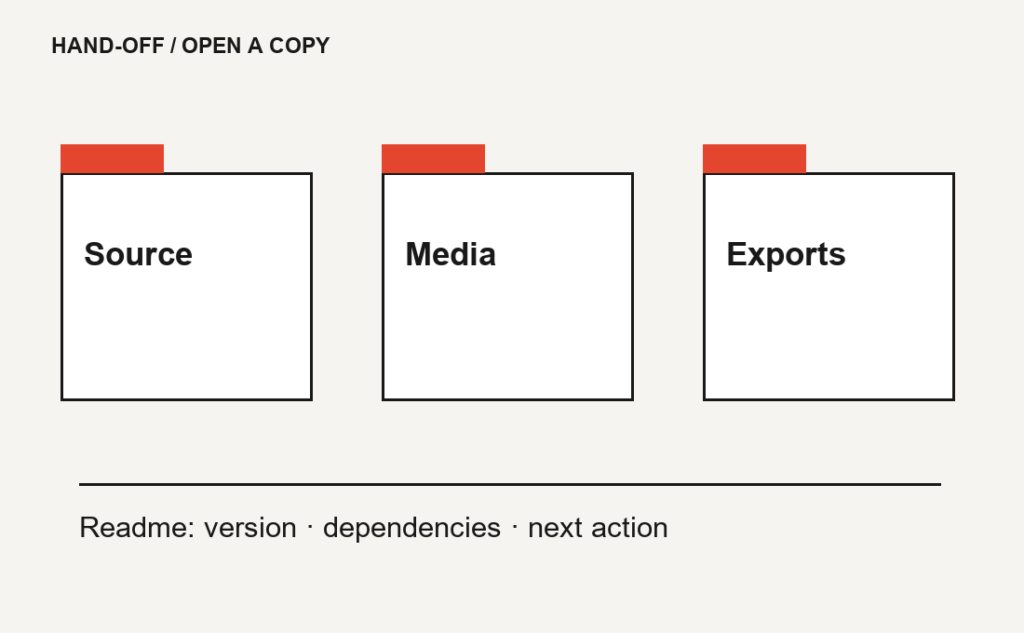
Choose your tools. Deliver a clean project.
The folders, notes and checks that make your work usable by someone else.
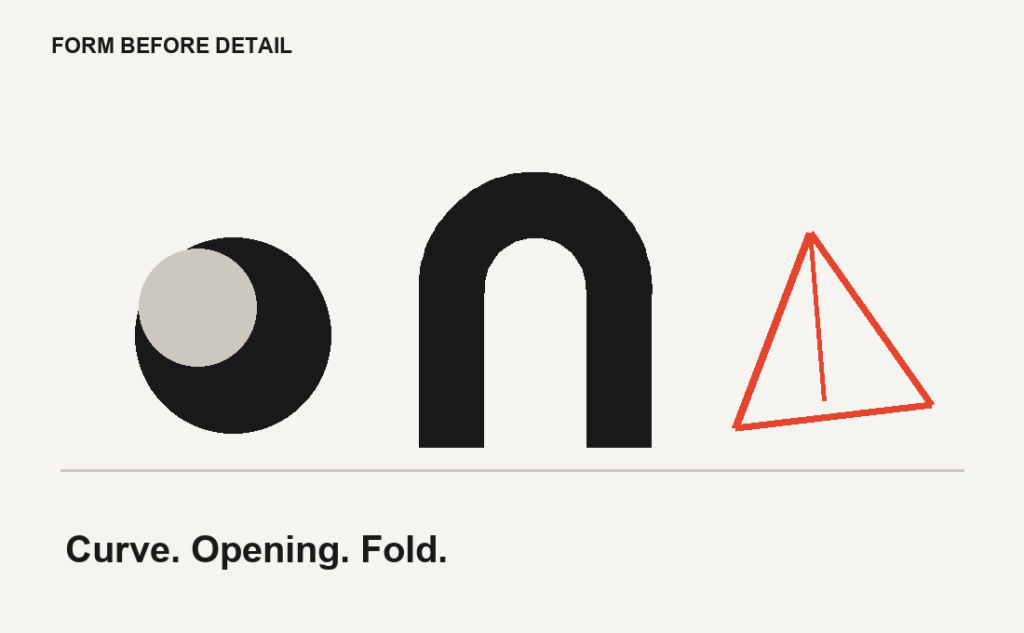
Make a lighting study with three ordinary shapes
A small scene for learning to separate form, shadow and background.
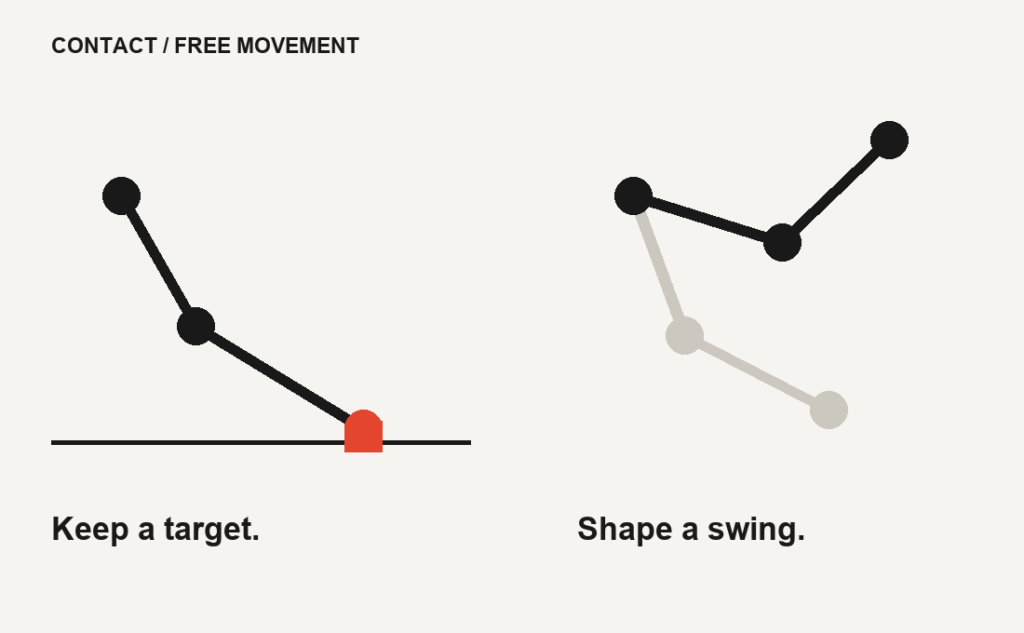
IK or FK? Choose the control that fits the action
Think about contact and arcs before reaching for a particular rig control.
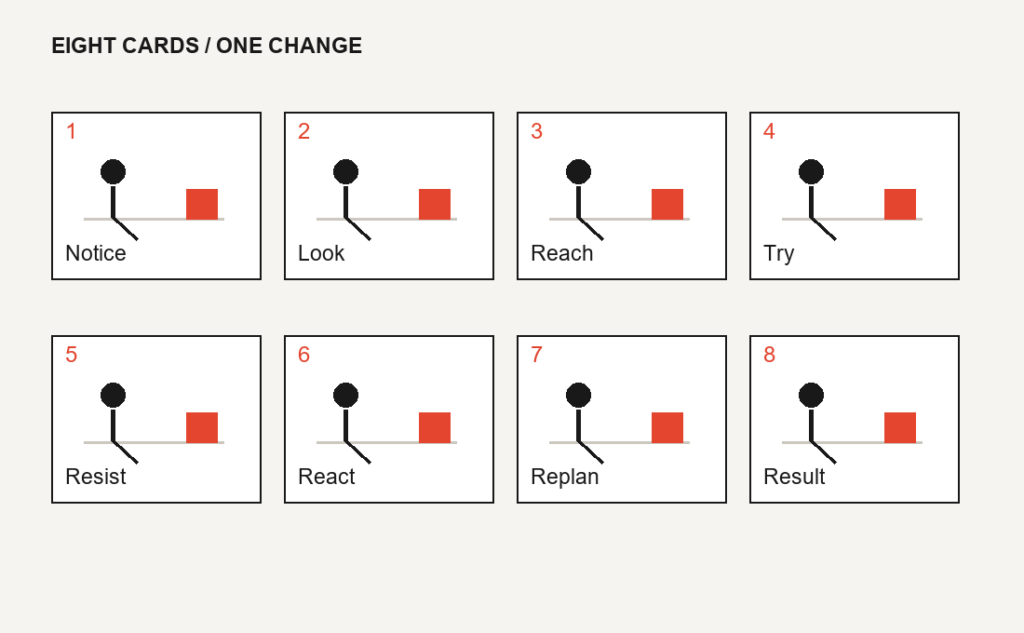
A storyboard you can finish before lunch
Plan a short scene with eight cards, one clear action and a firm stopping point.
LESS TALK. TRY THE SLIDER.
One path.
Two ways to move.
Compare even spacing with an ease-in. Move through the frames yourself.
Enter the timing lab →